Blog
 A Year of Telling the Truth About Work
 A Year of Telling the Truth About Work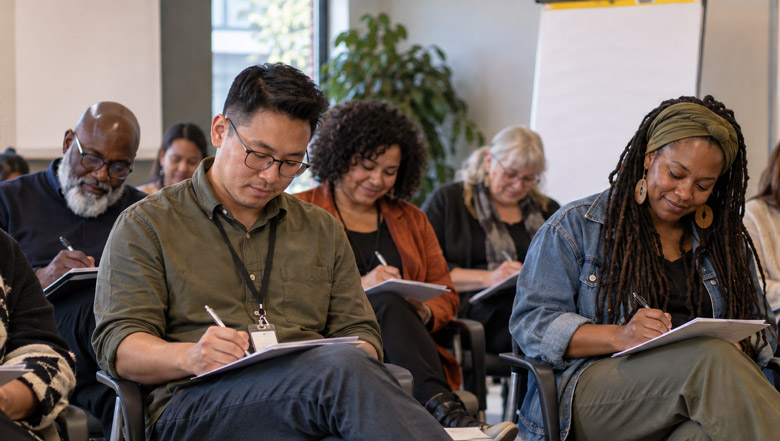
From Steffannie Roaché, MS LPC, Professor of Practice, Trauma Informed Oregon
We opened the 2026 Trauma-Informed Workforce Wellness Series with a promise that sounded simple: The way we work will honor our humanity.
Then the year happened.
The Workforce Wellness Feedback Survey
Across an entire year, between 110 to just under 150 people at a time came into a Zoom room at ten in the morning and told the truth about their workplaces. They came from housing, child welfare, early learning, community mental health, corrections, higher education, public health, and county and tribal government. Ninety-one of them filled out a feedback survey afterward. What those ninety-one wrote is the most useful thing this series produced, and it deserves to be shared back rather than filed.
2026 Workforce Wellness Field Guide
Keep the practices moving: language, short practices, team tools, and what belongs to the organization.
What People Said They Were Carrying
Participants frequently described destabilizing conditions:
Federal funding withdrawn and support services ending abruptly. Layoffs, then double the workload for whoever stayed. Programs restructured while staff waited to hear whether their positions survived. Immigration enforcement touching staff directly, and the fear that followed people home and kept them there. Administrators who would not say what was happening, and teams that stopped trusting the silence. Distrust turning into isolation, isolation turning into people working alone until they left the field entirely.
One participant wrote about wanting practical ways to prevent moral injury while working under constraints they did not choose. That phrase – moral injury – is worth sitting with. While burnout describes what happens when the work outpaces your capacity, moral injury describes something else: the distress of knowing what the right thing is and not being able to do it, and the particular ache of being let down by an institution you trusted. Many people in these sessions were describing the second thing while reaching for the language of the first.
A trauma informed workplace doesn’t treat that experience as a personal wellness deficit. It treats it as information about how the work is designed.
What Worked
Eighty-three people answered the question of how likely they were to recommend the series, and every one of them chose “likely” or “highly likely.” Eighty-one said trauma informed practice is relevant to their work. Eighty said the content represented the identities they hold, which matters more to me than any other number in the file.
More than half of the people who responded had attended a TIO series before. They came back. In a year when nobody had spare time, that is the finding I keep returning to.
Two design choices earned specific praise. The first was pacing that left room for people to arrive as themselves, including the option to keep a camera off and still be part of the room. The second was the Take a Break space, a side room for anyone who needed to step out of a discussion. One participant described choosing not to join a small group and still feeling included. Access is not only ramps and captions. Sometimes it is a door out of a conversation that stays open without penalty.
What Did not Work
Fifty-five people wrote something in the improvement suggestion box, and the largest single theme was small group logistics. Eleven people asked for more time, several of them naming two hours as the right length for sessions with practice built in. The ending, more than once, felt rushed. None of that is about content. It is about design, and design is fixable.
What People Said it Gave Them
The word that came up more than any other was “validating.” Not “interesting,” not “informative.” Validating. People wrote that the sessions named what they had been experiencing and put words to feelings they had been carrying without language for. One supervisor wrote that they felt relieved to learn they were not the only supervisor struggling with this. Another described community, collective healing, and shared experience. Another used four words: re-affirming, liberating, empowering, solidarity.
That is worth saying plainly, because it is easy to dismiss. In a year this hard, a room where the conditions get named accurately and other people nod is not a small thing. It is often the only place the naming happens at all.
What Changes Next Year
Small groups get built, not improvised. Sessions get the time the content needs. Practice-heavy topics will be emphasized specifically. The series will build. Participants asked for something that stacks rather than seven separate stops, and they were right. The 2027 sessions will be sequenced, with a companion booklet so the practice continues between them.
We will talk about trust. The loudest theme in a year of feedback was the distance between staff and the people making decisions above them. That deserves its own session, including what repair looks like when an apology is not coming.
One Thing I Don’t Want to Lose
There is a version of workforce wellness that hands people a breathing exercise and calls it support. That is not what trauma informed workforce wellness means. The trauma informed part is the whole point: it says the stress people are carrying is predictable, that it comes from how the work is designed and resourced, and that the fix belongs at that level too. Nobody in these sessions was fooled by it. What they asked for instead was honesty about the conditions, tools that survive contact with a real Tuesday, and other people in the room who understand the work.
That is what this series was for. We do wellness, specifically trauma informed workforce wellness, as a part of how the work gets done. It’s built into supervision, scheduling, policy, and the ordinary ways we treat each other in meetings and email.
In 2027 we’ll keep building on these concepts and we hope you’ll continue to join us and feel free to share with anyone who needs to work to finance their lives, and wants their workplaces to support a healthy work-life balance.
The 2026 Trauma-Informed Workforce Wellness Series was offered at no cost through Trauma Informed Oregon, a collaboration housed at the Regional Research Institute at Portland State University. Findings above come from 91 voluntary, anonymous participant surveys collected between January and July 2026. To hear about 2027 dates, join the TIO events list.